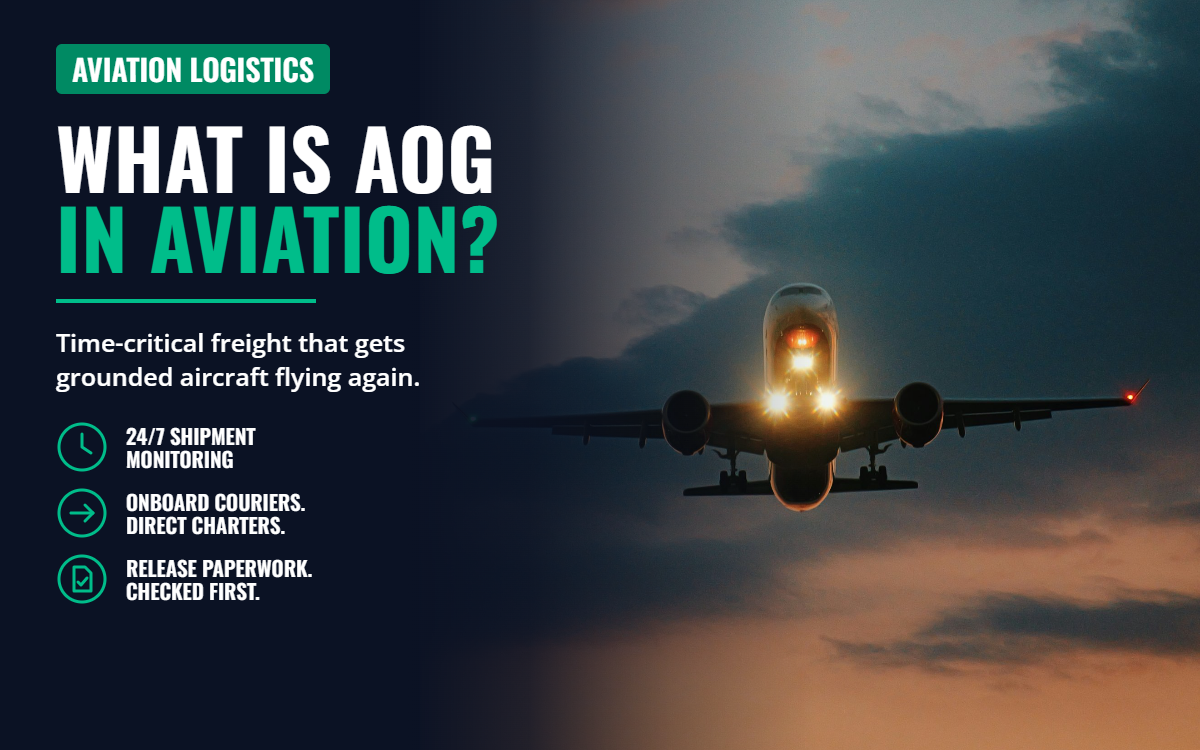
Few phrases trigger immediate urgency quite like an aircraft grounded unexpectedly. When an aeroplane is stuck on the tarmac waiting for a replacement part, schedules unravel, costs mount by the minute, and passenger plans are thrown into disarray.
Whether you manage fleet operations or need to source an urgent part for an unscheduled maintenance check, understanding the systems behind these rapid turnarounds is essential. Here is a clear look at what happens behind the scenes, how time-critical logistics works, and how to get stranded aircraft flying again without unnecessary panic.
What Does AOG Mean in Modern Flight Operations?
To understand how high the stakes are, we first have to unpack the core AOG meaning. In the aviation sector, the term stands for Aircraft On Ground. It is an industry status code that signals an aircraft is grounded due to a technical, mechanical, or safety defect that prevents it from flying legally and safely.
The true AOG meaning extends far beyond simple jargon. When this status is triggered, it automatically takes precedence over almost every other scheduled shipment in the network. A small sensor, a hydraulic valve, or a replacement turbine blade instantly moves to the front of the queue. Every link in the supply chain prioritises the part, because until that component reaches the engineers, an expensive airframe remains completely idle.
Why Do AOG Situations Occur?
Even the most thorough fleet maintenance programmes cannot prevent unexpected wear and tear. A routine pre-flight inspection might reveal bird strike damage, a hairline crack on a landing gear bracket, or an avionics fault on the flight deck. These unplanned AOG situations require rapid, decisive action.
Here are a few common catalysts that lead to these events:
- Unscheduled mechanical failures during turnaround checks.
- Foreign object debris (FOD) causing damage to engines or tyres.
- Extreme weather, such as heavy UK rain, hail, or lightning strikes, that damages surface panels or radar equipment.
- Failed electrical circuits and sensor malfunctions that prevent pre-departure clearance.
When these scenarios unfold, the engineering crew cannot afford to wait for standard supply lines. Resolving sudden AOG situations demands a rapid transport plan that treats every lost minute as a costly delay.
How Urgent Parts Move: Step-by-Step Logistics
Moving aviation spares requires far more precision than standard road haulage or general air freight. A specialist logistics provider must treat every stage of transit as an unbroken chain.
First, your logistics partner identifies the nearest certified part, whether that component sits in a regional hub, an airline storage locker, or a component manufacturer across the globe. Specialist couriers collect the item immediately, bypassing standard delivery depots.
Next, customs clearance and paperwork are handled in parallel with transit. Certified aircraft spares require strict traceability, including authorised release certificates (such as EASA Form 1 or FAA 8130-3). If customs authorities encounter missing documentation, your cargo sits in an import shed while the clock keeps ticking. Experienced couriers verify these papers before collection to prevent delays at border points.
Finally, delivery is made directly to the hangar apron or the maintenance crew’s hands. By using dedicated express vans, direct air charters, or onboard couriers who hand-carry components on the next available commercial flight, parts bypass normal warehouse processing entirely.
Our Expert Take: Getting It Right
In our experience, moving urgent freight during an unscheduled grounding requires careful attention to detail. Rushing a shipment without clear checks can create even bigger bottlenecks. Here are our top practical tips for managing an urgent spare parts dispatch:
- Double-check serial numbers and paperwork matching before handover: What we often see is a release certificate that lists a dash-number revision slightly different from the physical part tag. Customs officers and receiving engineers will reject the component on arrival, turning a fast delivery into a fresh delay.
- Wrap avionics against static before thermal sealing: When packing delicate cockpit displays and flight computers, never use standard bubble wrap directly against the casing. Use pink anti-static film first, followed by rigid shock-absorbing inserts. Road vibration and airport conveyor handling can induce subtle electrostatic discharges that ruin circuitry.
- Pre-clear customs using the proper aircraft parts tariff code: Ensure your forwarder uses correct end-use relief codes. This prevents the shipment from being flagged for routine tariff inspections or unexpected VAT holds upon arrival.
- Plan for apron access hurdles: A courier cannot simply drive up to an aeroplane. Check in advance whether your logistics carrier has airside-badged drivers, or coordinate an exact landside meeting point near the perimeter gate with the engineering team.
How Does Fast Logistics Protect Your Bottom Line?
An idle aircraft burns money every hour it sits on a taxiway or inside an active hangar. Between missed departure slots, passenger compensation fees, missed cargo commitments, and gate penalties, costs add up rapidly.
Working with a dedicated time-critical freight specialist means you minimise those financial hits. A team that monitors shipments 24/7 can re-route deliveries if a motorway grinds to a halt or a scheduled commercial flight faces cancellation. Having a trusted logistics partner behind your operations gives you peace of mind that a solution is already moving as soon as an alert is raised.
Common Questions About What Is AOG in Aviation
What is the primary difference between normal air freight and an AOG delivery?
Standard freight runs on fixed consolidation schedules, meaning packages sit in regional sorting depots until an entire vehicle or cargo container is filled. An AOG service is completely bespoke. It uses dedicated road transport, onboard couriers, or direct charters to bypass general cargo hubs and move directly from collection to the aircraft.
Who decides when an aircraft is placed in this status?
Licensed aircraft maintenance engineers, flight captains, or airline technical operations directors assign the status. They declare it when an issue compromises the airworthiness of the aircraft, meaning it cannot legally leave the ground until the exact defect is resolved with an approved spare part.
Can oversized components like jet engines be moved on an urgent basis?
Yes. Large structural components, full landing gear assemblies, and turbofan engines travel on specialist transport. These shipments require temperature-monitored, air-ride vehicles, bespoke engine stands, and coordinated heavy-lift cranes to ensure sensitive engine bearings remain protected throughout transit.
Keep Your Fleet Moving with Scanlon Freight
When your aeroplanes are grounded, you need a responsive partner who understands that every second counts. At Scanlon Freight Limited, our experts specialise in time-critical logistics for aviation and urgent global industries. Whether you need an onboard courier for a delicate micro-sensor or dedicated direct-drive transport across Europe, our team takes complete control of your cargo from collection to hangar delivery.
Get in touch with us today through Scanlon Freight to discover how we can support your operations.